



The Role of Keywords in SEO: A Beginner’s Guide
Table of Contents
- Introduction to Keywords in SEO
- Why Keywords Matter in SEO
- Types of Keywords in SEO
- Researching Effective Keywords
- Using Keywords Strategically
- Avoiding Keyword Stuffing
- The Evolution of Keywords in SEO
- Future of Keywords in SEO
- Conclusion
The Role of Keywords in SEO: A Beginner’s Perspective
1. Introduction to Keywords in SEO
In the digital marketing world, keywords are the foundation of effective SEO strategies. They help search engines understand the content of your website and match it with what users are searching for. For beginners, understanding keywords and how to use them can make a huge difference in how easily your content is found online.
Main Keyword: Keywords in SEO
Related Keywords: keyword research, SEO strategy, keyword types, keyword stuffing
2. Why Keywords Matter in SEO
Keywords are the bridge between a website and its potential audience. They tell search engines what your content is about, allowing them to match your page with relevant user searches. This alignment between keywords and user intent is what brings traffic to your website, improves rankings, and helps you reach your target audience.

3. Types of Keywords in SEO
Understanding the various types of keywords can enhance your SEO approach and content targeting. Here are some main types:
- Short-Tail Keywords: These are usually one or two words, broad, and have high search volume. Examples include “SEO” or “digital marketing.” They bring high traffic but are highly competitive.
- Long-Tail Keywords: Containing three or more words, these are specific, targeted phrases like “SEO strategies for beginners.” While they have lower search volumes, they tend to be less competitive and bring more qualified traffic.
- LSI (Latent Semantic Indexing) Keywords: These are keywords related to the main topic that provide context, such as “organic traffic” for “SEO.” LSI keywords help search engines better understand the main topic of a page.
Using the right mix of these keywords can improve your visibility and help you reach the right audience.
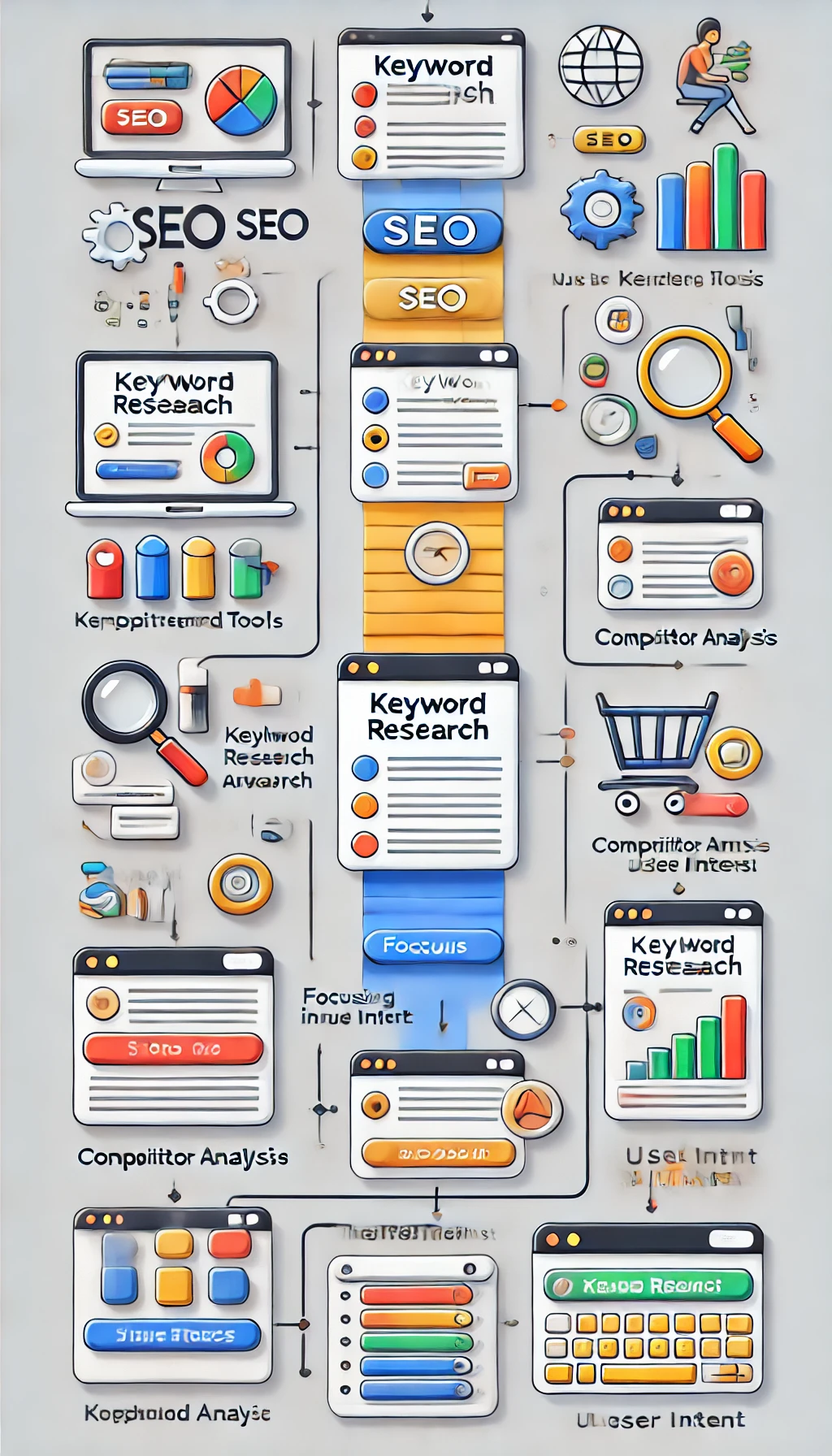
4. Researching Effective Keywords
Keyword research is an essential step for any successful SEO campaign. Here are some beginner-friendly methods for researching keywords:
- Use Keyword Tools: Tools like Google Keyword Planner, Ahrefs, or SEMrush provide data on search volume, competition, and related keywords.
- Analyze Competitors: Looking at keywords used by your competitors can give you insights into industry trends and audience interests.
- Consider User Intent: Ensure your keywords match what users are actually searching for, whether it’s informational, navigational, or transactional.

5. Using Keywords Strategically
Keyword placement and strategy are as crucial as the keywords themselves. Here’s how to strategically place keywords:
- Title Tags and Meta Descriptions: Keywords in these areas give search engines and users an idea of what your content covers.
- Headings (H1, H2, H3): Place keywords in headings to emphasize key sections and improve SEO structure.
- Body Content: Naturally incorporate keywords throughout the text. Aim for a natural flow without overloading keywords.
- Alt Text for Images: Describe your images with relevant keywords in the alt text to improve image search rankings.
- URL Structure: Include keywords in URLs for better context and readability.
6. Avoiding Keyword Stuffing
Keyword stuffing refers to overloading a webpage with keywords, which leads to poor user experience and can hurt SEO. Google and other search engines penalize keyword stuffing because it’s seen as an attempt to manipulate rankings. Here’s how to avoid it:
- Focus on Readability: Always prioritize user experience and readability. Keywords should flow naturally within your content.
- Diversify with Synonyms: Instead of repeating the same word, use synonyms and related terms to avoid overusing one keyword.
- Use Long-Tail Keywords: Spread out long-tail keywords across your content to maintain keyword density without overuse.
7. The Evolution of Keywords in SEO
In the early days of SEO, keyword density (the frequency of a keyword on a page) was crucial for rankings. However, as search engines became more advanced, they began focusing on understanding user intent, content quality, and relevance. Today, search engines prioritize high-quality content that meets users’ needs over keyword density alone.
With the rise of natural language processing (NLP) in search algorithms, search engines can understand synonyms, variations, and even the context of keywords. This means that content creators can focus more on topic relevance rather than repeating specific keywords multiple times.
8. Future of Keywords in SEO
As search engines become more sophisticated, the focus on keywords may shift towards an emphasis on topic clusters and user intent. Here’s what we can expect in the near future:
- AI-Driven SEO: AI will play a larger role in identifying keyword relevance and content quality, potentially automating parts of the keyword research process.
- Voice Search Optimization: With the rise of voice search, keywords may need to be more conversational, aligning with how users verbally ask questions.
- Topic Clusters Over Single Keywords: Content structured around topic clusters, rather than isolated keywords, may become a new SEO standard, creating a more comprehensive approach to ranking.
9. Conclusion
Keywords remain an essential component of SEO strategy, especially for beginners who are just starting to build their online presence. They help guide search engines and direct the right audience to your content. By understanding the types of keywords, researching effectively, using them strategically, and staying updated on keyword trends, you can create an SEO-friendly foundation that drives traffic and engagement to your website.
FAQs About Keywords and SEO
1. What are keywords in SEO?
Keywords are words or phrases that describe the content on your webpage. They help search engines understand the topic and match it with user searches.
2. Why are keywords important in SEO?
Keywords improve search engine rankings by helping search engines understand and match your content with relevant searches.
3. What is keyword stuffing, and why is it bad?
Keyword stuffing is overloading a page with keywords to manipulate rankings. It can lead to penalties as it creates a poor user experience.
4. How do I find keywords for SEO?
Use tools like Google Keyword Planner, analyze competitors, and focus on user intent to find effective keywords.
5. What’s the difference between short-tail and long-tail keywords?
Short-tail keywords are broad and bring high traffic, while long-tail keywords are more specific and bring qualified traffic.
6. How should I use keywords on my website?
Place keywords in titles, headers, meta descriptions, body content, and image alt text for optimal SEO.
7. What is keyword density, and does it still matter?
Keyword density is the frequency of a keyword in your content. While important, search engines now prioritize natural usage and context.
8. How has keyword usage evolved in SEO?
Keyword use has shifted from repetition to relevance, quality content, and user intent due to advances in search engine algorithms.
9. Are keywords still relevant with AI and NLP in SEO?
Yes, but the focus is shifting to semantic relevance and quality. Keywords remain important but within a broader context.
10. What is an LSI keyword?
LSI keywords are contextually related keywords that support your main keyword, helping search engines understand content better.