

Marketing Funnels Explained Simply (With Real Examples)
Table of Contents
Marketing Funnels Explained Simply

What Is a Marketing Funnel?
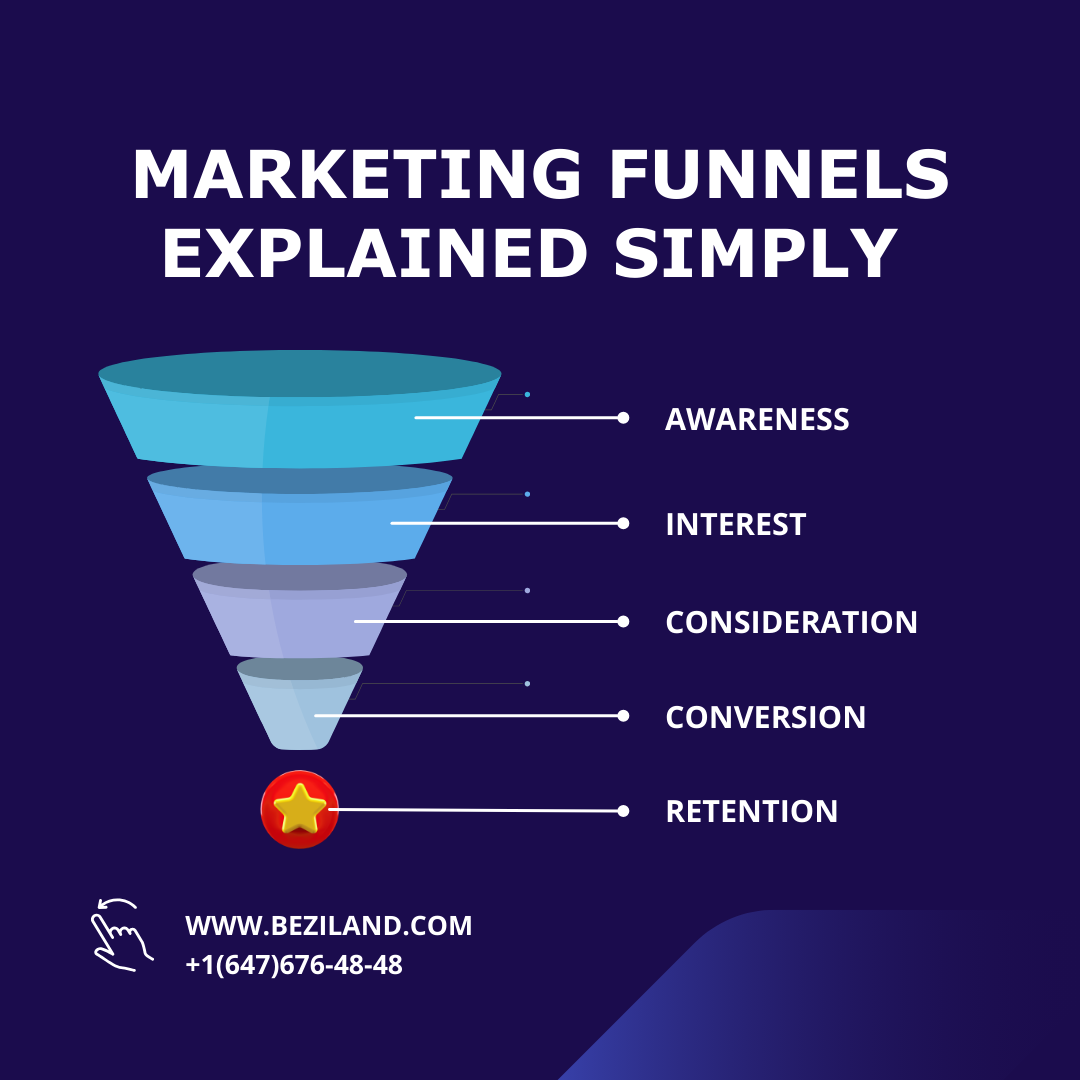
A marketing funnel is a visual representation of the steps a potential customer takes before making a purchase. Imagine it as a funnel-shaped path—wide at the top where lots of people enter, and narrow at the bottom where the most committed customers buy.
It helps you understand:
-
Where people drop off in the buying process
-
What kind of content or interaction they need at each stage
-
How to turn awareness into actual sales
The Stages of a Marketing Funnel
Stage 1: Awareness
This is where your audience first discovers your brand. They might see an ad, read a blog post, or hear about you from a friend.
Examples of awareness tactics:
-
Social media ads
-
Blog content optimized for search engines
-
Influencer shoutouts
-
Free events or webinars
Stage 2: Interest
Now that they know you exist, potential customers want to learn more. They start following you, joining your email list, or reading multiple pieces of your content.
Examples of interest-building activities:
-
Free guides or eBooks
-
Engaging email newsletters
-
Behind-the-scenes videos
-
Case studies or success stories
Stage 3: Consideration
At this stage, people are weighing their options. They’re comparing you to competitors and deciding if your product or service is the right fit.
Examples of consideration tactics:
-
Product demos or trials
-
Detailed comparison charts
-
Testimonials and reviews
-
Webinars with Q&A
Stage 4: Conversion
Here’s where the magic happens—they make the purchase.
Conversion-boosting tactics:
-
Limited-time discounts
-
Easy, secure checkout process
-
Clear calls to action
-
Money-back guarantees
Stage 5: Retention
After the sale, your job isn’t over. A returning customer is worth far more than a one-time buyer.
Retention strategies:
-
Loyalty programs
-
Personalized follow-up emails
-
Exclusive member discounts
-
Customer feedback surveys

Real-World Marketing Funnel Examples
Example 1: Starbucks
-
Awareness: Social media campaigns and influencer collaborations.
-
Interest: Engaging posts about coffee culture and seasonal drinks.
-
Consideration: Free samples in-store, reward app benefits.
-
Conversion: Mobile app ordering with rewards.
-
Retention: Points-based loyalty program encouraging repeat visits.
Example 2: SaaS Company (Dropbox)
-
Awareness: Referral incentives (“Get extra storage for inviting a friend”).
-
Interest: Free cloud storage plan.
-
Consideration: Comparison to competitors highlighting ease of use.
-
Conversion: Paid plan upgrades.
-
Retention: Continuous feature updates and loyalty perks.
Example 3: Local Bakery
-
Awareness: Local events and Instagram-worthy dessert photos.
-
Interest: Posting recipes and baking tips online.
-
Consideration: Coupons for first-time customers.
-
Conversion: Special weekend deals.
-
Retention: Punch-card rewards program.
How to Build Your Own Marketing Funnel
-
Define Your Target Audience
Know exactly who you’re trying to reach. -
Create Content for Each Stage
Match your messaging to where people are in the funnel. -
Use the Right Tools
Email marketing platforms, social media schedulers, and CRM systems can help. -
Track and Analyze Results
Use analytics to see where people drop off and improve those stages. -
Automate Where Possible
Save time with automated email sequences and remarketing ads.
Common Mistakes to Avoid
-
Skipping the retention stage – You’ll lose repeat business.
-
Not tracking data – You can’t improve what you don’t measure.
-
Using the same content for all stages – Tailor your approach.
-
Making the process complicated – Keep the journey smooth.
Conclusion
A marketing funnel isn’t just a fancy business term—it’s a practical, powerful way to guide your customers from curiosity to commitment. When done right, it not only increases sales but also builds lasting relationships with your audience.
Start small, track your results, and keep refining your funnel. The more you understand your customer’s journey, the more successful you’ll be in guiding them through it.
FAQs
1. What is the main purpose of a marketing funnel?
To guide potential customers through the buying journey in a structured way.
2. How long does it take to build an effective marketing funnel?
It can take anywhere from a few weeks to several months, depending on your business and audience.
3. Can small businesses benefit from marketing funnels?
Absolutely—funnels work for businesses of all sizes.
4. Do I need expensive tools to create a marketing funnel?
Not necessarily; you can start with free tools and upgrade later.
5. What’s the difference between a marketing funnel and a sales funnel?
A marketing funnel focuses on attracting and nurturing leads, while a sales funnel is more about closing deals.
6. Can social media be part of a marketing funnel?
Yes—social platforms are great for awareness and interest stages.
7. Should I automate my marketing funnel?
Automation can save time and ensure consistent communication, especially for follow-ups.
8. How often should I update my marketing funnel?
Regularly review and tweak it based on performance data.
9. What if my funnel isn’t converting?
Analyze each stage, find where drop-offs occur, and adjust your strategy.
10. Can one business have multiple funnels?
Yes—different products or customer segments may require unique funnels.